What Is a High Efficiency Motor and How Does It Work?

Time:2026-10-02 Author:Aria
0%

A High Efficiency Motor converts electrical power into mechanical rotation with fewer losses than a conventional motor. Its shaft may drive a pump, fan, conveyor, or compressor. Inside, magnetic fields create torque between the stator and rotor. Copper resistance, magnetic hysteresis, air friction, and heat still consume energy. The goal is to reduce those losses without weakening reliable performance.

Paul Scheihing, a former U.S. Department of Energy industrial efficiency leader, has described motor systems as “the largest end use of electricity in American industry.” That observation explains their importance. A small efficiency gain can matter when a factory runs motors for thousands of hours. Consider a pump room: warm motor housings, humming bearings, and fluctuating current can reveal wasted energy. Premium designs often use improved steel, better winding layouts, tighter manufacturing tolerances, and advanced cooling. Some also pair with variable frequency drives, which adjust speed instead of wasting power through throttling.

Yet the efficiency label does not tell the whole story. A High Efficiency Motor can perform poorly if it is oversized, misaligned, or lightly loaded. Installation matters. Maintenance matters more than many buyers expect. Engineers should compare efficiency at the actual operating point, not only at the nameplate rating. Standards and test methods also differ across regions, creating possible confusion. I have seen technical explanations treat efficiency as a single number. It is not. The better question is practical: how much useful work will this motor deliver, for how long, under real site conditions? That answer requires measurements, not assumptions.
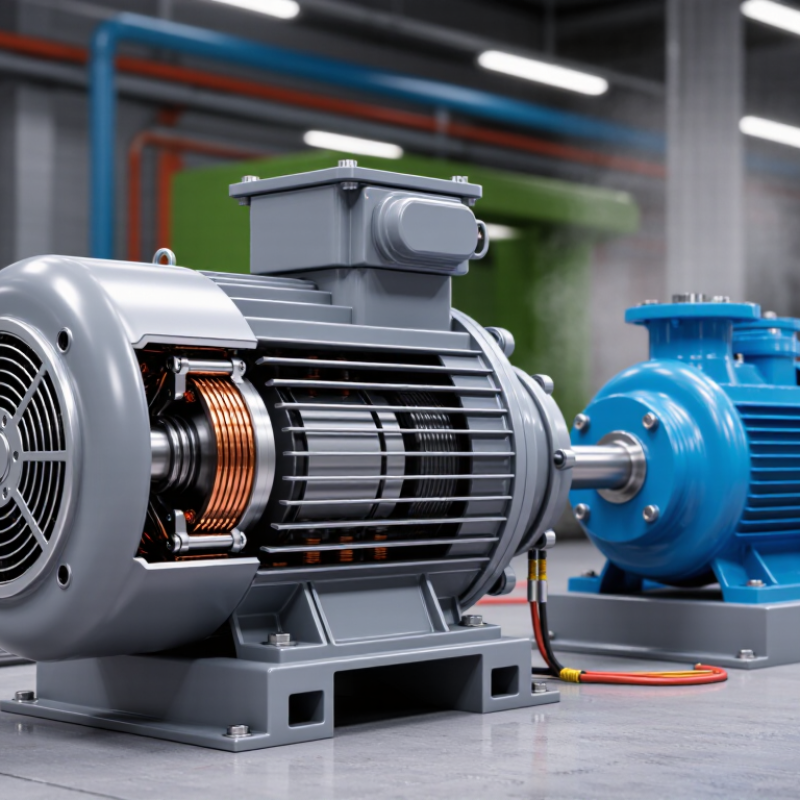
What Is a High Efficiency Motor and How Does It Work?

What Defines a High-Efficiency Motor?

A high-efficiency motor converts electrical power into mechanical rotation while wasting less energy as heat. Its definition depends on measured efficiency, not appearance or marketing language. Engineers compare input power with shaft output under specified voltage, frequency, load, and temperature. Efficiency is output divided by input. Small losses matter. Copper resistance, iron magnetization, friction, windage, and cooling can all reduce useful power. Magnetic fields inside the stator and rotor create torque, turning the shaft. A higher efficiency class usually delivers more shaft power from the same electrical supply.

What defines high efficiency?

Recognized testing standards and efficiency classes provide the clearest reference. The class must match the motor’s rated power and operating conditions. A published efficiency figure is meaningful only when its test method is stated. In practical use, load matters greatly. A motor running far below its rated load may operate less efficiently, even with an excellent certified rating. Variable-speed operation also changes cooling and electrical losses. This is where specifications can mislead. I would not judge performance from the nameplate alone.

Tips: Check rated efficiency, service factor, speed, and expected load profile. Measure current, voltage, temperature, and power during real operation. Keep bearings aligned and ventilation clean. Oversizing is common, but not always wise. A small field measurement can challenge a comfortable assumption.

How High-Efficiency Motors Convert Electricity into Motion

A high-efficiency motor converts electrical energy into rotational motion through controlled magnetic forces. Inside the motor, the stator receives electric current and creates a rotating magnetic field. This field interacts with the rotor, causing it to turn inside the stationary housing. The rotor then transfers torque through a shaft to operate a pump, fan, conveyor, or machine tool.

The process is not perfectly efficient. Some electrical energy becomes heat in the copper windings. Additional losses come from magnetic resistance in the iron core, bearing friction, air movement, and small electrical gaps. High-efficiency designs reduce these losses with improved magnetic materials, accurate winding patterns, tighter manufacturing tolerances, and better cooling paths. The result is more useful mechanical output from the same electrical input.

In field testing, efficiency depends heavily on operating conditions. A motor running near its rated load usually performs better than one operating far below it. Voltage imbalance, poor alignment, dust, and worn bearings can also increase energy waste. A cool outer casing is not proof of high efficiency. Measurements from a power meter and a torque or load test provide stronger evidence. It is easy to overstate savings without checking the actual duty cycle. That calculation still deserves careful review.

What Is a High-Efficiency Motor and How Does It Work?

High-efficiency motors convert electrical energy into mechanical motion by creating a rotating magnetic field in the stator. The magnetic field induces torque in the rotor, while improved materials, optimized electromagnetic design, and reduced friction minimize energy losses.

The chart uses representative full-load efficiency values for 15 kW, four-pole, three-phase induction motors. At the same 100% electrical input, a higher-efficiency motor delivers more usable shaft power and wastes less energy as heat, magnetic loss, friction, and fan loss. Exact values vary with motor rating, frequency, speed, and operating conditions.

Key Components That Improve Motor Efficiency

What Is a High Efficiency Motor and How Does It Work?

A high efficiency motor converts electrical energy into rotation while wasting less energy as heat. That sounds simple, but the details matter. Its laminated steel core reduces magnetic losses inside the stator. Carefully shaped windings create a stronger magnetic field with less electrical resistance. The rotor then follows this rotating field and produces mechanical power. Lower losses usually mean lower operating temperatures and longer service life.

Several components support this performance. High-quality copper or aluminum conductors reduce resistance in the windings. A precisely balanced rotor limits vibration and unnecessary friction. Sealed, low-friction bearings help maintain smooth rotation. The air gap between the rotor and stator must remain small and even. Small differences can increase magnetic losses. A cooling fan or external cooling system removes heat before insulation begins to weaken.

Control equipment also influences efficiency. A variable-speed drive can match motor speed to the actual workload. This matters in pumps, fans, and conveyors that rarely need full output. However, efficiency ratings can be misunderstood. A motor may perform well under laboratory conditions but lose efficiency when poorly aligned, overloaded, or operated at the wrong voltage. Regular inspection should include current readings, temperature checks, bearing noise, and alignment. No motor is perfect. Maintenance decisions still require judgment, and measured results are more reliable than a label alone.

What Is a High Efficiency Motor and How Does It Work? — Key Components That Improve Motor Efficiency
Category Key Component or Principle How It Works Efficiency Benefit Typical Engineering Consideration
Operating Principle Electromagnetic Induction An alternating magnetic field in the stator induces current in the rotor, producing torque and mechanical rotation. Converts electrical power into mechanical power with limited energy loss. Correct voltage, frequency, load, and motor sizing are essential for efficient operation.
Core Construction Low-Loss Electrical Steel Laminated electrical-steel sheets guide magnetic flux while reducing hysteresis and eddy-current losses. Reduces magnetic losses in the stator and rotor core. Thin laminations and high-quality magnetic materials generally reduce core losses, but may increase material cost.
Windings Optimized Copper or Aluminum Windings Conductors carry current through the stator windings to create the rotating magnetic field. Larger or better-designed conductors reduce resistance and I²R copper losses. Winding fill, conductor cross-sectional area, insulation quality, and thermal limits must be balanced.
Rotor Low-Resistance Rotor Cage In an induction motor, conductive rotor bars and end rings carry induced current and generate torque. Lower rotor resistance reduces slip-related losses during normal operation. Rotor design must provide both high starting torque and low running losses.
Air Gap Precisely Controlled Air Gap The air gap separates the stator and rotor while allowing magnetic energy to transfer between them. A properly sized, uniform air gap reduces the magnetizing current required to produce torque. An excessively large or uneven air gap increases magnetic losses, noise, vibration, and current demand.
Bearings Low-Friction Bearings Bearings support the rotor shaft and allow it to rotate with minimal mechanical resistance. Reduces frictional losses and helps maintain stable shaft alignment. Correct lubrication, alignment, load rating, and maintenance directly affect bearing efficiency and service life.
Cooling System Efficient Heat Dissipation Fans, cooling fins, ducts, or other cooling arrangements remove heat generated by electrical and mechanical losses. Lower operating temperature reduces winding resistance and helps preserve insulation performance. Blocked ventilation, excessive ambient temperature, or poor airflow can reduce output capability and efficiency.
Rotor and Stator Alignment Balanced Mechanical Design Accurate balancing and alignment keep the rotor centered and minimize unwanted mechanical forces. Reduces vibration, friction, acoustic losses, and bearing stress. Installation quality, shaft alignment, foundation stiffness, and coupling condition are important.
Power Conversion Variable Frequency Drive Compatibility A variable frequency drive adjusts supply frequency and voltage to regulate motor speed and torque. Can reduce energy consumption in variable-torque applications by matching speed to actual demand. Drive losses, harmonic currents, motor insulation, cable length, and minimum speed must be evaluated.
Load Management Operation Near Rated Load Motor efficiency is generally highest within an appropriate portion of its rated load range rather than at very light load. Avoids oversized motors operating inefficiently at low utilization. Motor selection should consider continuous load, starting requirements, duty cycle, and future capacity.
Energy Losses Loss Categories Total losses include stator and rotor copper losses, core losses, friction, windage, and additional stray-load losses. High-efficiency designs reduce several loss categories simultaneously rather than relying on one component. Efficiency is calculated as useful mechanical output divided by electrical input: η = Output ÷ Input × 100%.
Efficiency Classification International Efficiency Classes Standardized classes such as IE1, IE2, IE3, and IE4 indicate progressively higher minimum efficiency requirements for applicable motor types and ratings. Provides a consistent method for comparing motor efficiency performance. Applicable requirements vary by motor rating, pole count, operating mode, and local regulations.
Performance Measurement Rated Efficiency and Power Factor Rated efficiency measures power conversion performance, while power factor indicates how effectively electrical current is used from the supply. Considering both values helps evaluate operating current, losses, and system-level energy use. Measurements should be made under defined voltage, frequency, temperature, and load conditions.
Maintenance Condition-Based Maintenance Monitoring temperature, vibration, current, insulation condition, and bearing status helps identify developing faults. Prevents misalignment, overheating, and bearing deterioration from increasing energy losses. Regular inspection should follow the motor duty, environment, maintenance schedule, and safety requirements.
Efficiency reminder: A motor’s actual energy performance depends on its design, operating load, supply quality, speed control, installation, cooling, and maintenance. Efficiency values should be compared under equivalent test conditions.

Efficiency Standards, Ratings, and Energy Savings

A high-efficiency motor converts electrical power into rotation while wasting less energy as heat, friction, and magnetic loss. In an induction motor, alternating current creates a rotating magnetic field in the stator. That field induces current in the rotor, producing torque across the air gap. Better steel, tighter manufacturing tolerances, and improved cooling can reduce these losses. The principle is familiar.

Efficiency standards make comparisons more useful. IEC 60034-30-1 classifies many motors from IE1 to IE4, while newer designs may reach IE5 performance. The International Energy Agency reports that electric motor systems consume roughly half of global electricity. The U.S. Department of Energy also identifies motor-driven equipment as a major share of industrial electricity use. In the European Union, Ecodesign rules generally require IE3 efficiency for many three-phase motors rated from 0.75 to 1,000 kilowatts.

A higher IE rating does not guarantee savings in every installation. Oversized motors, throttled pumps, blocked filters, and poor power quality can erase expected gains. At 30 kilowatts and 6,000 operating hours, a one-percentage-point efficiency improvement may save about 1,800 kilowatt-hours annually. That sounds modest. Across hundreds of motors, it becomes significant. In practice, I would not trust a nameplate alone. Measured load, operating hours, maintenance records, and control settings deserve equal attention. Efficiency calculations can also simplify real conditions too much.

Common Applications and Selection Considerations

A high-efficiency motor converts more electrical power into useful shaft power, reducing heat and wasted energy. The International Energy Agency reports that motor-driven systems consume roughly half of global electricity. This makes efficiency important in pumps, fans, compressors, conveyors, and HVAC equipment. In a factory, even a small efficiency gain can reduce continuous operating costs.

Selection should begin with the real load, not the motor nameplate alone. Check rated power, torque, speed, duty cycle, starting method, and expected operating hours. A pump running twelve hours daily needs different planning from a conveyor starting only twice per shift. IEC 60034-30-1 efficiency classes, such as IE3 and IE4, provide a useful comparison. However, higher efficiency does not automatically mean the lowest total cost.

The U.S. Department of Energy estimates that motor systems consume about 68% of industrial electricity in the country. That figure supports careful system design, including correct sizing and variable-speed control. Oversizing is common, and it can create poor part-load performance. An inverter may improve control, but it can also introduce heat, electrical noise, or bearing stress if installation details are ignored.

I have seen efficiency calculations look convincing until maintenance records revealed clogged filters and unstable voltage. Ambient temperature, dust, moisture, alignment, and service access deserve equal attention. Selection is not perfectly predictable. Real operating data should challenge the first calculation.

FAQS

What is a high-efficiency motor?

It converts more electrical energy into useful shaft rotation. Less energy becomes heat. Efficiency is measured, not guessed from appearance.

How is motor efficiency measured?

Engineers compare electrical input power with mechanical shaft output. Tests specify voltage, frequency, load, and temperature. Conditions matter.

Which losses reduce motor efficiency?

Copper resistance, magnetic losses, friction, windage, and cooling demands reduce useful output. Small losses can become expensive during continuous operation.

Which components improve motor performance?

Laminated steel cores reduce magnetic losses. Low-resistance windings, balanced rotors, and smooth bearings support efficient rotation.

Why does the air gap matter?

The rotor and stator need a small, even gap. Uneven spacing increases magnetic losses and may create vibration.

Can a high-rated motor become inefficient?

Yes. A motor may lose efficiency when lightly loaded, misaligned, overheated, or operated at the wrong voltage. Labels are not enough.

How should a motor be selected?

Match rated power, torque, speed, duty cycle, starting method, and operating hours to the real workload. A twelve-hour pump needs careful sizing.

Can variable-speed control save energy?

It can match speed with actual demand in pumps, fans, and conveyors. Installation must still manage heat, electrical noise, and bearing stress.

What maintenance supports motor efficiency?

Check current, voltage, temperature, bearing noise, alignment, and ventilation. Clean clogged filters and keep cooling paths open. Small checks help.

Is a larger motor always better?

No. Oversizing can cause poor part-load efficiency and unnecessary cost. My first calculation might look convincing, yet field measurements can disagree.

Conclusion

A High Efficiency Motor is designed to transform electrical energy into mechanical motion while minimizing wasted power, heat, and friction. Its performance is defined by a strong balance between output, energy consumption, durability, and operating conditions. When electricity enters the motor, magnetic fields are created in the stator and rotor, producing torque that turns the shaft. Improved magnetic materials, optimized windings, high-quality bearings, effective cooling systems, and precise manufacturing all help reduce electrical and mechanical losses.

Efficiency ratings and energy standards provide a practical way to compare motor performance and estimate long-term energy savings. Although a high-efficiency model may require a greater initial investment, it can lower operating costs and reduce heat generation over time. These motors are commonly used in pumps, fans, compressors, conveyors, industrial equipment, and building systems. Selecting the right motor requires considering load requirements, speed, duty cycle, installation conditions, control methods, maintenance needs, and expected operating hours.

Aria

Aria

Aria is a dedicated marketing professional with a deep passion for innovative strategies and a keen understanding of our company's product offerings. With a wealth of experience in the industry, Aria excels at crafting engaging content that highlights the unique features and benefits of our......