Choosing the right Wireless Motor Control system in 2026 requires more than comparing connection ranges or purchase prices. Global buyers need dependable performance, clear documentation, and practical support after installation. A motor may operate in a quiet warehouse, a humid greenhouse, or a dusty production line. Each environment changes the decision.
This guide examines leading systems for industrial, commercial, and building automation applications. It considers wireless protocols, control distance, response time, encryption, power requirements, and integration with existing equipment. It also reviews installation procedures, mobile commissioning tools, feedback sensors, and emergency stop arrangements. These details matter when a motor drives a conveyor, pump, shutter, or ventilation fan.
Real-world experience often reveals weaknesses that product brochures omit. A strong signal can still fail near heavy machinery or reinforced walls. Battery-powered controls may reduce wiring, yet create maintenance work later. Some systems claim broad compatibility, but installers may need extra gateways or custom programming. That is not always a deal breaker. It does require honest planning.
Safety remains essential.
Reliable suppliers should provide test records, firmware information, warranty terms, and region-specific technical assistance. Buyers should confirm electrical compatibility and applicable local requirements before ordering. Independent testing, pilot installations, and professional commissioning can reduce costly mistakes. No single system suits every market or motor type. The best choice balances proven field performance, secure communication, lifecycle cost, and the skills available to maintain it. This 2026 comparison aims to support that decision with practical evidence, careful evaluation, and room for improvement.
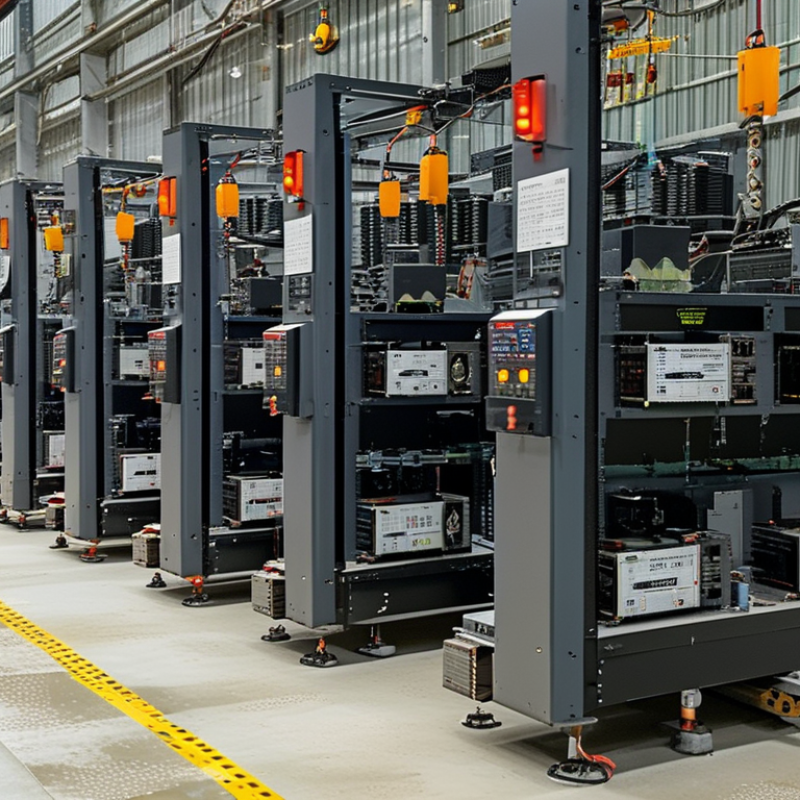
Drives regulate speed, torque, and acceleration for pumps, conveyors, fans, and compact machines. Wireless links reduce cabling, especially where motors move or access is difficult. Field commissioning shows that simple layouts often outperform complicated networks.
Vibration sensors can reveal bearing wear, while temperature and current sensors expose overloads. Position sensors help coordinate motors on shared conveyors. A nearby gateway collects these signals and translates wireless protocols into industrial control messages.
It may also filter data locally, keeping basic control available during cloud or network interruptions.
Keep it practical.
Wi-Fi can support high data rates, while low-power mesh or sub-gigahertz links may travel better through large spaces. Gateways should support strong device identity, encryption, network segmentation, and signed firmware updates. Drives need defined responses for lost communication, such as controlled stopping or local speed control. Emergency functions should not depend on an ordinary wireless connection.
A laboratory test may not represent a crowded factory floor.
Global buyers should request range tests, latency records, recovery behavior, and maintenance procedures before purchase. Documentation matters, but technicians still need clear wiring diagrams, spare sensor plans, and accessible diagnostic logs.
A reliable architecture is measured during faults, not only during a smooth demonstration.
2026 Best Wireless Motor Control Systems for Global Buyers
For wireless motor control, three numbers deserve practical scrutiny: below 10 ms latency, 99.99% uptime, and a 1 km operating range. The ITU-R M.2410 report defines ultra-reliable low-latency communication targets near 1 ms, but real factories face interference, reflections, and network congestion. A sub-10 ms result is realistic only after site testing. The 3GPP TR 38.913 study also links reliability with application design, not radio speed alone. A 99.99% uptime target allows about 52.6 minutes of annual interruption. That sounds strong, yet maintenance windows can consume it quickly.
Range is equally physical. A clear 1 km path may shrink sharply around steel frames, cranes, and concrete walls. I have seen stable signals fail near motor cabinets because cable routing and grounding were overlooked. Buyers should request measured latency at peak load, packet-loss data, recovery time, and performance during motor starts. Factory acceptance tests should record results at several distances, not just beside the gateway. Perfect figures on a quiet test bench can mislead.
Tips: Demand a heat map, a 24-hour stress test, and local fallback control. Check whether the 1 km claim means line-of-sight. Verify uptime calculations, including firmware updates and scheduled service. Leave margin; wireless conditions change. A small pilot is wiser than a large assumption.
For global buyers, wireless motor control is not only a connectivity decision. It is a safety engineering decision. IEC 60204-1 requires suitable electrical equipment, protective bonding, isolation, control circuits, and emergency-stop arrangements. A radio link cannot replace a validated safety function. That point is easy to miss.
ISO 13849-1 requires risk-based design and performance-level verification for safety-related control systems. Buyers should request PL calculations, diagnostic coverage data, fault-exclusion details, and validation records. SIL 2 follows a different assessment route, commonly linked with IEC 62061 or IEC 61508. Do not treat SIL 2 and PL d as identical labels. They may address similar risks, but their methods differ. A competent integrator must define the required architecture before selecting hardware.
IP65 means protection against dust ingress and water jets. It does not mean immersion protection. Site conditions matter: washdown pressure, cable glands, antenna placement, metal obstructions, and temperature cycling can change performance. The International Federation of Robotics reported 541,302 industrial robot installations in 2023, showing how quickly automated equipment is entering mixed production environments. Deloitte’s 2024 Smart Manufacturing and Operations Survey found that 86% of respondents expect smart manufacturing to become a major competitiveness driver. More connected equipment also creates more failure paths. I would not approve a system from a certificate alone. Test the emergency stop, loss-of-signal response, restart behavior, and safe torque removal under realistic operating conditions. A perfect datasheet can still meet an imperfect factory.
Global Compliance Reference: IEC 60204-1, ISO 13849-1, SIL 2, and IP65
This chart presents the applicable reference levels for machinery electrical safety, functional safety, and enclosure protection. The values use each standard’s own classification scale and are not a performance ranking.
For 2026, wireless motor control buyers need more than a frequency comparison. A practical scorecard should measure range, latency, interference, installation effort, and lifecycle cost. The 2.4 GHz band is affordable and widely supported, but crowded warehouses can create unstable commands. 5 GHz usually delivers cleaner channels and faster response, yet walls and metal equipment reduce its reach. Sub-GHz systems travel farther through industrial spaces. They often sacrifice bandwidth, which motor control rarely needs.
5G suits large sites, mobile equipment, and geographically separated facilities. However, recurring data fees and network dependence can raise operating costs. Compare hardware, gateways, subscriptions, maintenance, and replacement cycles together. I once ranked low purchase price too highly. That decision ignored antenna installation and troubleshooting time. A better review includes measured response at maximum distance, under load, and during interference.
Tips: Test with real motors, not only bench simulators. Check fail-safe behavior when signals disappear. Require encrypted communication, mutual device authentication, signed firmware updates, secure boot, and network segmentation. Ask suppliers for vulnerability reporting procedures and support timelines. Keep manual control available. It may seem old-fashioned, but it protects production during outages. Also verify regional spectrum rules and 5G availability before purchasing. A spreadsheet helps, though field evidence should carry more weight than attractive specifications.
2026 Best Wireless Motor Control Systems for Global Buyers
Application Matching: AGVs, Pumps, HVAC, Conveyors, and Robotic Machinery
Wireless motor control systems are no longer selected by range alone. In real installations, application behavior matters more than marketing figures. AGVs need low-latency commands, stable roaming, and automatic stopping when communication fails. A warehouse floor may contain metal racks, moving vehicles, and changing radio conditions. Testing during peak traffic is essential.
Pumps require a different approach. Flow pressure, motor temperature, and dry-run protection should be monitored together. A wireless controller can reduce cabling across remote water sites, but weak signal planning may create costly interruptions. HVAC systems benefit from scheduled speed control and sensor feedback. Local control should remain available when the network is unavailable. Small detail. Large consequence.
Conveyors need coordinated starts, controlled acceleration, and clear fault reporting. Wireless commands should not allow one section to restart unexpectedly after a power event. Robotic machinery demands tighter timing, predictable feedback, and careful separation between operational control and safety functions. Wireless control is useful, but it should not replace required hardwired safety devices.
From field commissioning experience, buyers often underestimate antenna placement and electrical noise. We have also seen reliable hardware perform poorly after rushed configuration. That is an uncomfortable lesson. Check regional frequency requirements, enclosure ratings, temperature limits, maintenance access, and cybersecurity controls before purchase. A practical trial with the actual motor, load, and installation environment reveals weaknesses that a laboratory demonstration may hide.
| Application | Recommended Wireless System Profile | Typical Wireless Technology | Typical Indoor Range | Typical One-Way Latency | Control Data Requirement | Motor and Drive Compatibility | Recommended Network Topology | Environmental Requirements | Wireless Control Suitability | Key Design Consideration |
|---|---|---|---|---|---|---|---|---|---|---|
| Automated Guided Vehicles (AGVs) | Low-latency mobile control with roaming support | Industrial Wi-Fi 6/6E or private 5G; dual-network redundancy for critical fleets | 50–150 m per access point indoors, depending on metal obstructions and cell planning | Typically 10–30 ms on a properly engineered industrial network | Low bandwidth; cyclic commands, status data, telemetry, and diagnostics generally require less than 1 Mbps per vehicle | Ethernet, PROFINET, EtherNet/IP, Modbus TCP, CAN gateway, and drive-controller interfaces | Managed infrastructure with fast roaming, centrally coordinated access points, and separated control VLANs | Vehicle electronics commonly require 0–45 °C or wider industrial temperature options; shock and vibration protection are important | Excellent | Use wireless communication for motion commands and fleet coordination, but retain local obstacle detection, emergency stop, and safe-speed functions on the vehicle. |
| Industrial Pumps | Long-range supervisory control and condition monitoring | Sub-GHz private radio, WirelessHART-style mesh, ISA100-style mesh, industrial Wi-Fi, or private LTE/5G | 100–1,000 m depending on frequency, antenna height, obstructions, and regulatory power limits | Typically 50 ms–2 s; suitable for supervisory commands rather than fast closed-loop control | Low bandwidth; pressure, flow, vibration, temperature, run status, alarms, and start/stop commands commonly require less than 100 kbps per pump | Variable-frequency drives, soft starters, motor protection relays, remote I/O, and PLC interfaces | Star or mesh network with gateway redundancy for large sites and difficult cable routes | Enclosures may need IP65/IP66 or higher; hazardous-area installations require the applicable explosion-protection certification | Excellent | Keep pressure and flow stabilization loops local to the drive or PLC. Wireless links are best used for setpoints, operating states, alarms, and maintenance data. |
| HVAC Fans, Pumps, and Dampers | Building-wide wireless automation and energy optimization | Wi-Fi, private LTE/5G, 802.15.4 mesh, or low-power sub-GHz mesh integrated with building automation | 30–100 m indoors per access point or mesh node; larger facilities require planned multi-hop coverage | Typically 100 ms–5 s, depending on the control loop and building-management architecture | Low bandwidth; temperature, humidity, differential pressure, valve position, fan speed, alarms, and occupancy data usually require less than 100 kbps per endpoint | EC motors, variable-frequency drives, BACnet/IP, BACnet MS/TP gateways, Modbus RTU/TCP, and remote I/O | Mesh or managed star topology with local controllers for air-handling units and plant equipment | Indoor devices commonly require 0–50 °C operation; mechanical rooms may require higher humidity resistance and IP-rated enclosures | Excellent | Wireless is highly effective for retrofit projects where cabling is disruptive. Local freeze protection, smoke control, and life-safety sequences must remain independently available. |
| Conveyors and Sortation Lines | Segmented wireless control with local interlocking | Industrial Wi-Fi 6, private 5G, or industrial mesh radio with wired backbone at fixed control cabinets | 50–150 m per access point in typical warehouses; coverage must be validated around racking and moving equipment | Typically 10–50 ms for commands; deterministic behavior depends on network design and local control logic | Low to medium bandwidth; motor commands, encoder status, photo-eye states, fault codes, and production data commonly require 0.1–2 Mbps per line segment | Motor starters, variable-frequency drives, servo drives, distributed I/O, PLCs, and industrial Ethernet gateways | Zone-based architecture with local PLC or drive control and wireless supervisory coordination between zones | Dust, vibration, electromagnetic interference, and metal shelving must be considered; industrial enclosures and shielded cabling may be needed at fixed nodes | Very Good | Use local jam detection, stop circuits, and interlocks. Wireless control should not be the sole channel for emergency-stop or personnel-protection functions. |
| Robotic Machinery | High-performance wireless monitoring and non-safety command channel | Industrial Wi-Fi 6/6E or private 5G with edge computing; short-range deterministic links may be used for tool data | 30–100 m for high-performance indoor coverage; shorter distances may be preferred around dense machinery | Typically 5–20 ms for well-engineered motion-adjacent communications; wireless suitability depends strongly on the robot controller | Medium to high bandwidth for diagnostics, vision metadata, recipes, and process data; 1–100 Mbps may be required depending on payloads | Robot controllers, servo systems, industrial Ethernet, OPC UA, MQTT gateways, and machine-vision systems | Dedicated access points or private cellular cells with edge processing and traffic prioritization | High electromagnetic compatibility, vibration resistance, and reliable antenna placement are required; moving cable carriers may still be necessary for power and safety circuits | Good | Wireless is suitable for recipe changes, diagnostics, production data, and selected supervisory commands. Real-time servo loops and safety-rated motion functions should remain local or use certified safety communication. |
| Crane and Hoist Motor Systems | Industrial remote control with high interference tolerance | Licensed or managed industrial radio, private LTE/5G, or industrial Wi-Fi with redundant coverage | 100–500 m in open industrial areas; actual range depends on antenna height, steel structures, and local regulations | Typically 20–100 ms for operator commands, with local drive logic handling braking and limit functions | Low bandwidth; joystick commands, speed references, limit states, overload alarms, and diagnostics generally require less than 1 Mbps | Variable-frequency drives, brake controllers, hoist controllers, remote I/O, and safety relays | Point-to-point or managed star topology with redundant communication paths where downtime is costly | Shock, vibration, dust, temperature variation, and strong metal reflections require rugged radios and carefully positioned antennas | Good | Wireless control must include a fail-safe stop state, watchdog timeout, command authentication, and independent overload, upper-limit, and emergency-stop protection. |
| Packaging and Filling Machinery | Flexible machine networking and recipe management | Industrial Wi-Fi 6, private 5G, or secure wireless bridge between machine modules | 30–100 m in production areas, subject to stainless-steel surfaces and radio reflections | Typically 10–50 ms for supervisory and sequence commands | Medium bandwidth; recipes, machine states, quality data, alarms, and diagnostics usually require 0.1–10 Mbps per machine | Servo drives, variable-frequency drives, PLCs, remote I/O, HMI systems, and industrial Ethernet protocols | Managed star topology with local machine PLCs and segmented production networks | Washdown zones may require IP65/IP66 or higher; food and pharmaceutical sites may require hygienic stainless-steel hardware | Very Good | Wireless reduces changeover wiring and supports modular equipment, while high-speed synchronization should remain within the local machine control system. |
| Water and Wastewater Motor Stations | Wide-area remote telemetry with resilient control fallback | Private LTE/5G, licensed radio, sub-GHz telemetry, or secure cellular gateway | 1–20 km for engineered wide-area links; terrain, antenna elevation, spectrum, and licensing determine actual coverage | Typically 0.5–10 s for supervisory control and telemetry | Low bandwidth; pump status, level, flow, pressure, energy, alarms, and remote setpoints usually require less than 100 kbps per station | Remote terminal units, variable-frequency drives, motor protection relays, PLCs, and SCADA gateways | Redundant star, licensed point-to-multipoint, or store-and-forward mesh architecture | Outdoor equipment may require IP66/IP67, surge protection, lightning protection, and operation across approximately −20 to 60 °C | Excellent | Each station should continue safe local operation during link loss. Apply secure authentication, encryption, role-based access, and event logging to all remote commands. |
| Mining and Bulk Material Handling | Rugged long-range wireless control and asset monitoring | Private LTE/5G, licensed industrial radio, Wi-Fi mesh, or rugged sub-GHz systems | 100 m–several kilometers depending on mine layout, line of sight, frequency, and infrastructure | Typically 20–200 ms for supervisory commands; critical protection remains local | Low to medium bandwidth; motor states, belt speed, vibration, condition data, alarms, and commands commonly require 0.1–5 Mbps per machine group | High-power motor drives, soft starters, PLCs, distributed I/O, belt scales, and condition-monitoring systems | Private cellular or redundant mesh with edge gateways at substations and conveyor transfer points | Dust, vibration, moisture, temperature extremes, and hazardous-area requirements may require certified rugged or explosion-protected equipment | Good | Perform a site survey for propagation and interference. Ensure local permissives, pull-cord stops, belt misalignment protection, and motor protection remain functional without wireless connectivity. |
| Solar Tracking and Energy Storage Motorized Systems | Low-power distributed control and asset telemetry | Sub-GHz mesh, private LTE/5G, industrial Wi-Fi, or secure cellular IoT gateways | 100–2,000 m for sub-GHz or cellular-connected field networks, subject to terrain and antenna design | Typically 0.5–30 s for tracking and supervisory control | Low bandwidth; position, current, voltage, temperature, wind-protection status, and fault data generally require less than 100 kbps per controller | DC motor controllers, geared actuators, variable-frequency drives, PLCs, and battery-management gateways | Distributed mesh or cellular star with local tracker controllers and gateway aggregation | Outdoor devices commonly require IP65/IP66 or higher, UV resistance, surge protection, and wide-temperature operation | Excellent | Use local wind-stow, overcurrent, limit-switch, and battery protection logic. Wireless links should support secure firmware updates and authenticated commands. |
Wireless connectivity does not replace validated safety functions. Emergency stops, isolation, protective bonding, and safe shutdown still need independent design.
Request performance-level calculations, diagnostic coverage data, fault-exclusion details, and validation records. Certificates alone are not enough.
No. They can address similar risks, but their assessment methods differ. A qualified integrator should define the required architecture first.
IP65 protects against dust and water jets. It does not protect equipment during immersion.
Metal walls, antenna placement, cable glands, washdown pressure, and temperature cycling can affect reliability. Factory conditions are rarely perfect.
Measure range, latency, interference, installation effort, and lifecycle cost. A crowded 2.4 GHz warehouse may cause unstable commands.
Lower-frequency systems often travel farther through industrial spaces. They usually provide less bandwidth, which motor control may not require.
It can suit large sites, mobile equipment, and separated facilities. Recurring fees and network dependence may increase operating costs.
Test real motors at maximum distance, under load, and during interference. Check emergency stops, signal loss, restart behavior, and safe torque removal.
Require encrypted communication, mutual authentication, signed firmware, secure boot, and network segmentation. Keep manual control available for outages. It still matters.
Wireless Motor Control systems in 2026 combine motor drives, wireless gateways, sensors, and secure communication protocols to support flexible industrial automation. Leading architectures target less than 10 ms latency, 99.99% system uptime, and communication ranges of up to 1 km, depending on the environment and network design. Selecting the right frequency is essential: 2.4 GHz and 5 GHz support higher data rates, Sub-GHz improves coverage and penetration, while private 5G can serve large, mobile, and data-intensive facilities.
Global buyers should evaluate compliance with IEC 60204-1, ISO 13849-1, SIL 2, and IP65 protection requirements, alongside cybersecurity, installation costs, maintenance, and lifecycle support. The best solution depends on the application: AGVs benefit from low-latency mobility, pumps and HVAC systems require reliable monitoring, conveyors need coordinated control, and robotic machinery demands precise, secure communication. A practical buyer scorecard should balance performance, safety, environmental resistance, scalability, and total ownership cost.
